
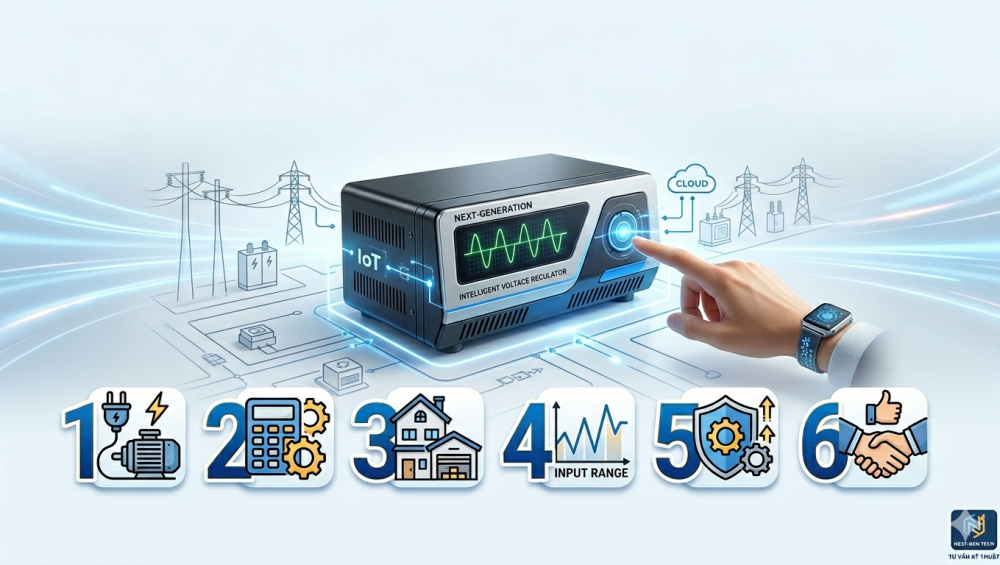
In an era where automation, IoT, and sensitive electronic equipment dominate both domestic and industrial landscapes, ensuring a stable power supply is no longer a luxury—it is a necessity. Choosing the right Next-Generation Intelligent Voltage Regulator (IVR) is a critical decision that directly impacts the operational efficiency, safety, and lifespan of your electrical infrastructure.
To help you make an informed investment, this guide breaks down the essential factors you must evaluate before purchasing.
1. Identify the Electrical Phase System
The foundational step in selecting an IVR is matching it to your existing electrical infrastructure.
-
Single-Phase Systems: Typically used in residential homes, small offices, and retail shops. If your setup runs on standard domestic appliances, a Single-Phase Intelligent Voltage Regulator is the correct choice.
-
Three-Phase Systems: Standard in industrial plants, manufacturing facilities, data centers, and commercial buildings operating heavy machinery. For these environments, a Three-Phase Intelligent Voltage Regulator is mandatory to ensure balanced voltage across all lines.
2. Calculate the Total Load Capacity (with a Safety Margin)
Choosing an IVR with a capacity too close to your actual power consumption is a recipe for system failure. You must calculate your total load accurately while accounting for two critical factors:
-
Inrush Current (Surge Wattage): Devices with inductive loads (such as air conditioners, refrigerators, pumps, and industrial motors) require 3 to 5 times their rated running current just to start up.
-
Future Expansion: Always leave room for growth so you don’t have to replace the regulator when adding new equipment.
💡 Pro Tip: As a rule of thumb, always select an IVR with a capacity that is 20% to 30% higher than your calculated peak load to ensure optimal performance and prevent overheating.
3. Assess the Installation Environment and Form Factor
Physical space and environmental conditions heavily dictate the design of the regulator you need.
-
Wall Mount Voltage Stabilizers: Ideal for homes, server rooms, or small offices where floor space is limited. Their sleek, elevated design keeps them out of the way while maintaining proper airflow.
-
Floor-Standing / Cabinet Regulators: Designed for heavy-duty industrial environments, workshops, or dedicated electrical rooms. These units are built to handle massive power loads and often feature rugged enclosures to withstand dust and ambient heat.
4. Analyze the Input Voltage Window (Working Range)
Voltage fluctuations vary drastically depending on geographic location and grid stability. You must analyze your local grid behavior before choosing a model.
-
Standard Range: Suitable for urban areas where voltage dips or spikes are mild and infrequent.
-
Wide/Ultra-Wide Range: Crucial for rural areas, remote industrial zones, or sites near heavy industrial grids where voltage frequently drops drastically (brownouts) or surges unexpectedly. Your IVR must have an input window wide enough to capture and correct these extremes without switching to bypass mode.
5. Prioritize Advanced Smart Protection Features
A truly Next-Generation regulator does more than just smooth out voltage; it acts as a smart shield for your entire electrical network. Ensure your chosen model includes the following protections:
| Protection Feature | What it Does |
| Over-Voltage & Under-Voltage Protection | Automatically cuts off power or corrects the output when grid voltage goes beyond safe thresholds. |
| Overload & Short-Circuit Protection | Utilizes smart circuit breakers to prevent system damage during current spikes or hardware faults. |
| Phase Failure & Reverse Phase Protection | (For 3-Phase systems) Prevents catastrophic motor damage if a phase goes missing or is wired incorrectly. |
| Smart LCD Display & Monitoring | Provides real-time tracking of input/output voltage, current, frequency, and fault logs. |
| IoT/Remote Connectivity | Allows technicians to monitor grid health and regulator performance remotely via mobile apps or central management software. |
6. Partner with a Reputable Manufacturer & Service Provider
Hardware specifications only tell half the story. Because an IVR is a long-term infrastructure investment, the vendor you choose matters just as much as the product. Look for:
-
On-Site Technical Consultation: Vendors who help you audit your load and survey your site before purchase.
-
Robust Warranty & After-Sales Support: Fast response times for maintenance, as any regulator downtime means your entire operation is at risk.
-
Availability of Spare Parts: Ensuring that components like servo motors, carbon brushes, or electronic boards can be replaced quickly without long lead times.
Conclusion
Selecting the perfect Next-Generation Intelligent Voltage Regulator requires a balanced look at your phase system, load requirements, environmental constraints, and grid stability. By prioritizing smart protection features and partnering with a trusted engineering supplier, you guarantee a seamless, safe, and highly efficient power supply for years to come.
Unsure which model fits your specific configuration? Contact our technical engineering team today for a customized load assessment and product recommendation.